
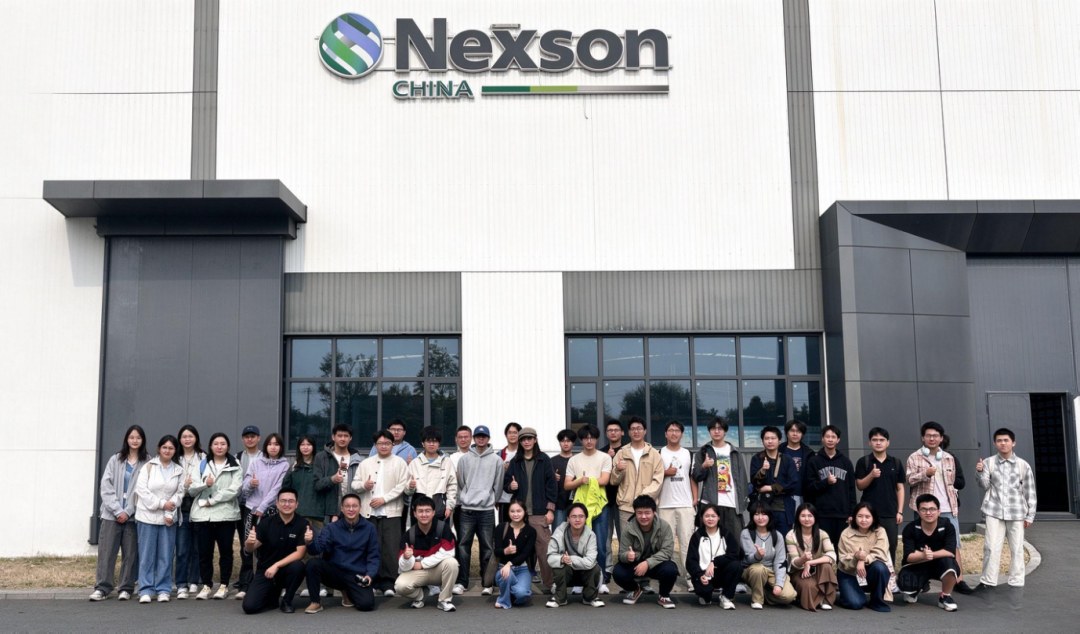
Students and faculty from the Department of Energy and Resources Engineering at Peking University’s College of Engineering recently visited Nexson’s Beijing factory on the shore of Yanqi Lake in Huairou. Four teachers led the group, with one teaching assistant. They followed the full sequence from plate stamping and welding through to final assembly, watching a plate heat exchanger take shape from raw sheet to a finished machine. The guide explained each step in order while the students listened and took notes, grounding abstract heat transfer equations in concrete workstations.
Reading Nexson from the culture wall
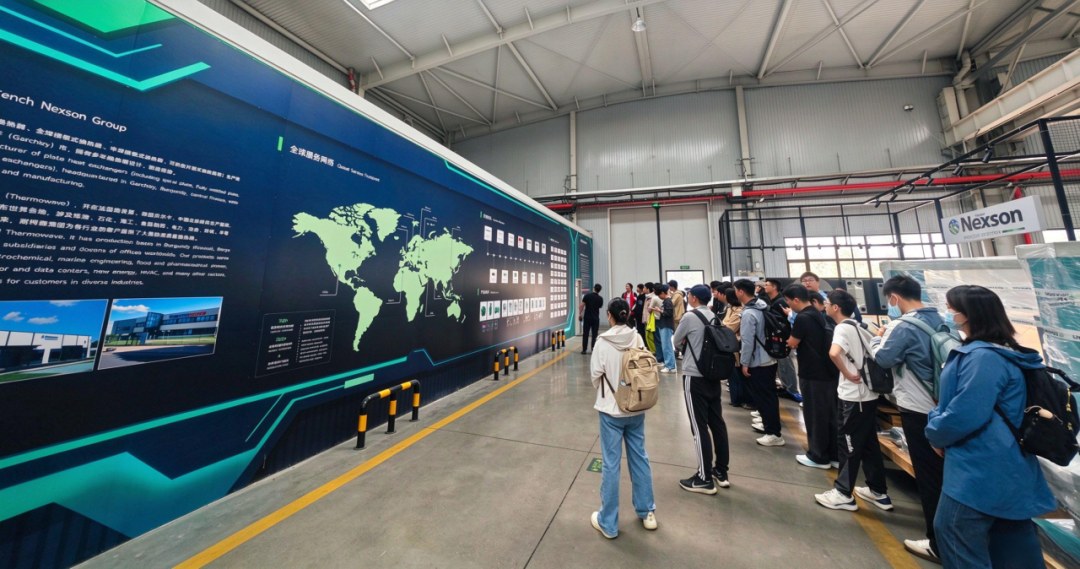
The visit started at the factory culture wall, which sets out the group at a glance: headquartered in France, with the plate heat exchanger brand thermowave operating a production base in China and products serving chemicals, petrochemicals, energy, food and HVAC. The guide then laid out the complete chain from design and manufacturing to after-sales, giving the students a framework before they stepped into the workshop.
How one plate is formed
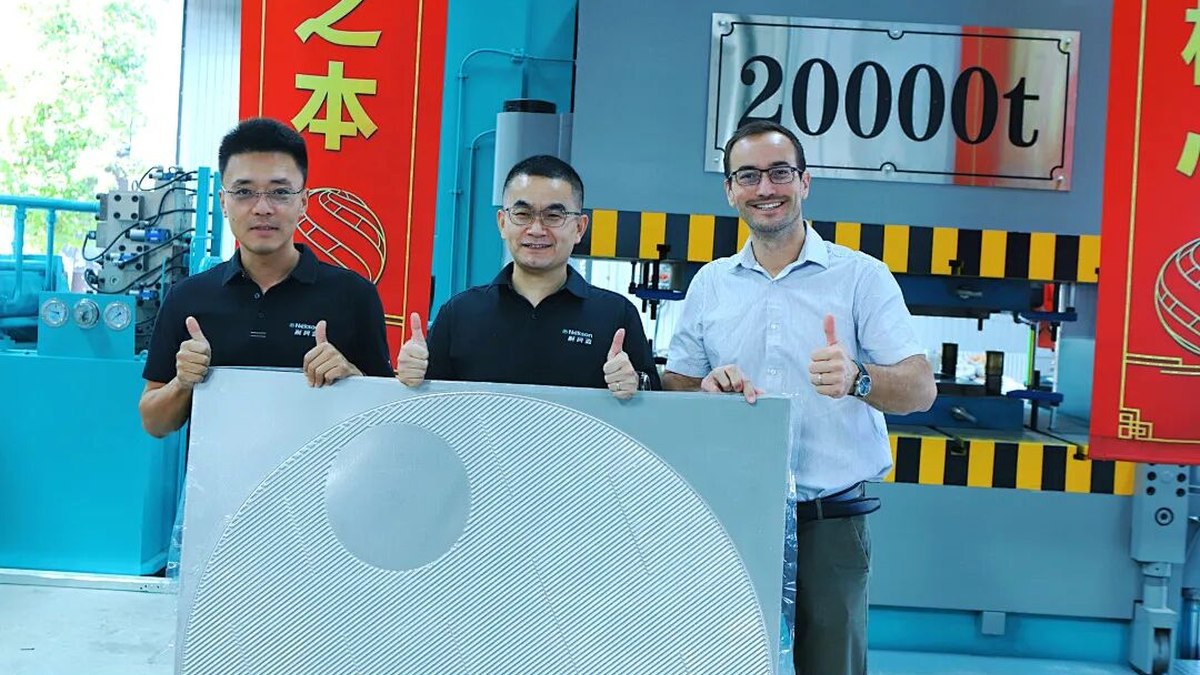
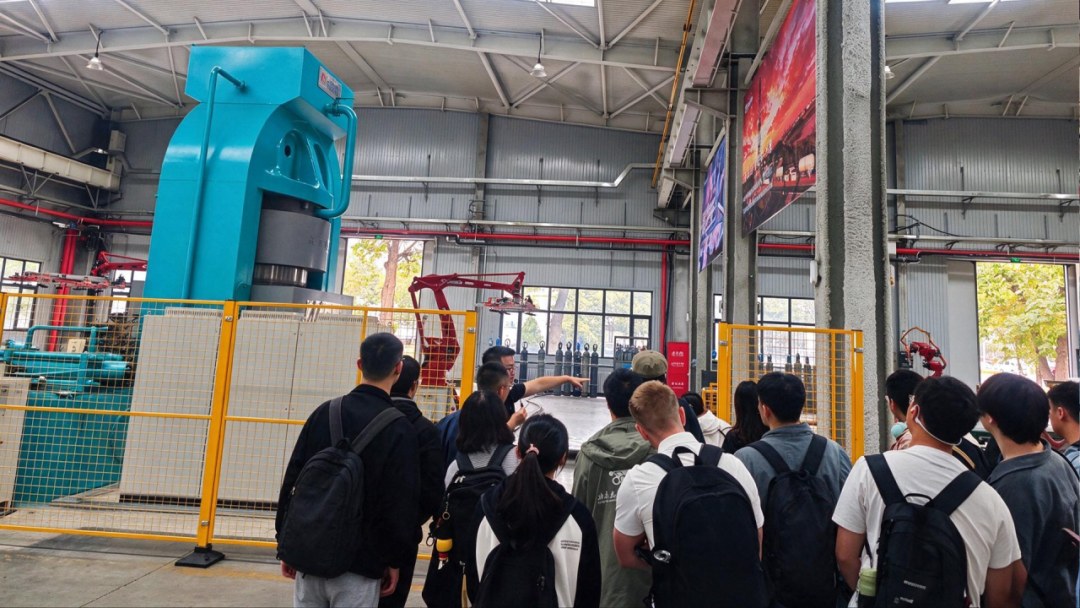
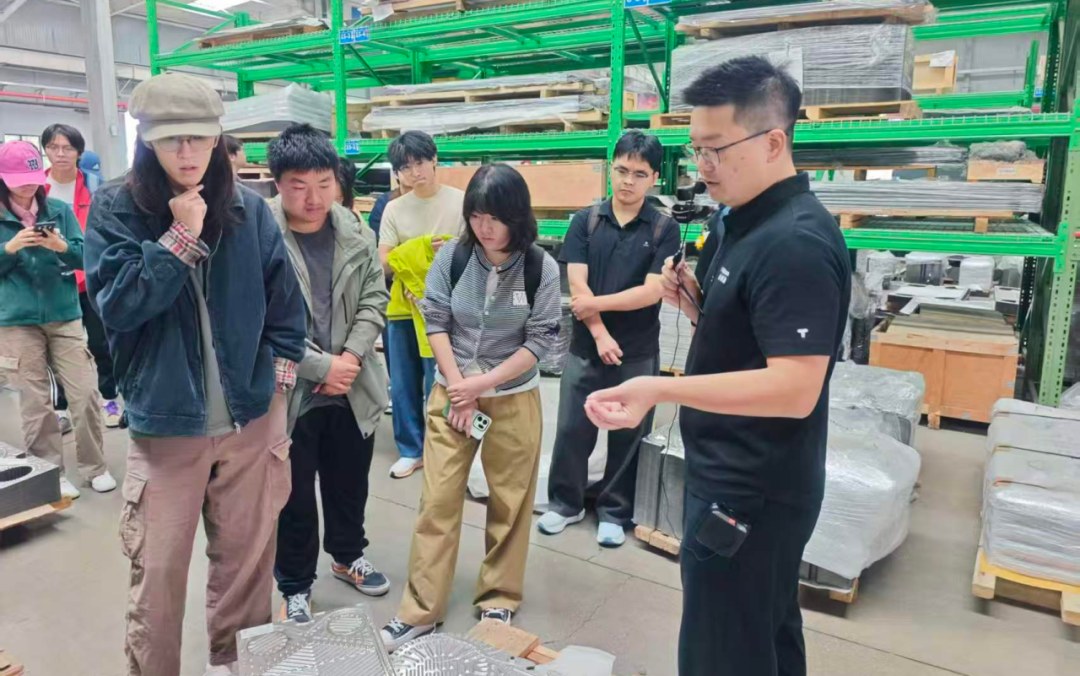
The plate is the core heat transfer element of a plate heat exchanger, and its performance is decided by the corrugation. In the stamping area, a robotic arm feeds stainless steel sheet into the die and the press forms a regular corrugated pattern — the pattern governs the unit’s heat transfer coefficient, pressure drop and pressure rating. As the guide explained, one model serves different duties precisely through changes in plate pattern: the herringbone corrugation creates dense contact points between adjacent plates, which intensify heat transfer and act as structural support at the same time. Plates are stored by specification in the stock area, and the students compared several plate patterns with their gasket arrangements to understand how the plate pack determines heat transfer area.
From plate to finished unit
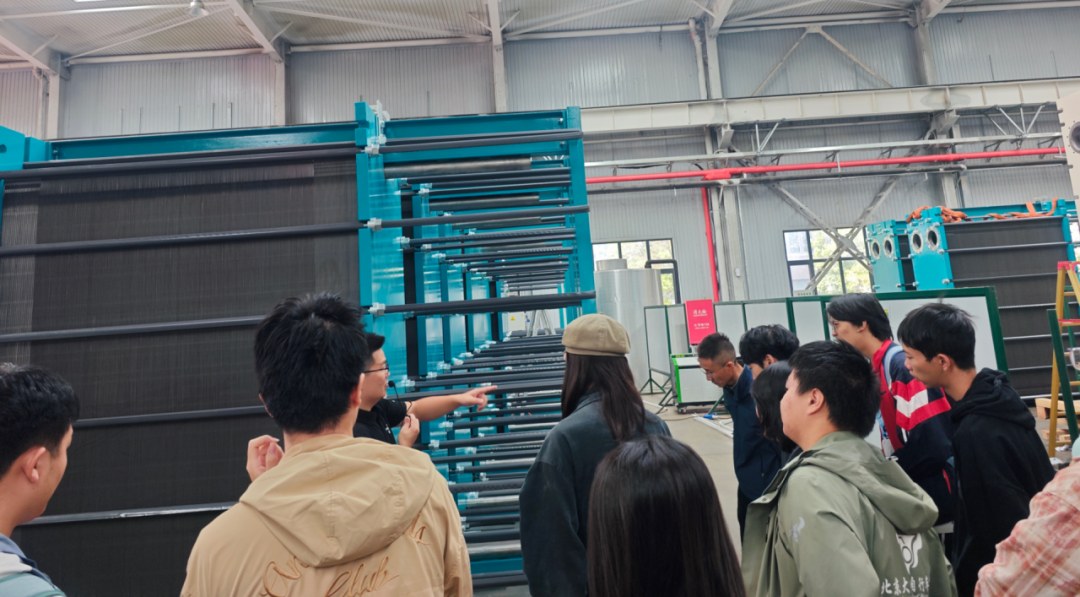
In the assembly area, several large plate heat exchangers stood at their workstations, plate packs several metres high built from hundreds of plates and compressed into a single body by clamping bolts on both sides. Assembly runs in a fixed order: gaskets and plates are matched one by one and hung in sequence, the tightening device closes to the calculated clamping dimension, and the unit moves on to inspection. Log mean temperature difference, pressure drop and flow velocity — concepts from the lecture hall — became specific numbers here: plate gaps of a few millimetres, and yet several hundred square metres of heat transfer area in one machine.
Robotic welding on the automated line
In the automated plate welding area the group saw the other way of sealing the channels between plates. This station welds the core of plate-and-shell units: a robotic arm holds the torch and runs a set path to complete argon arc welding pass by pass between plate pairs, turning the stacked plates into a sealed core. Gasketed units separate adjacent plates with gaskets; welded units close the channels with weld seams, which lets the finished machine handle higher temperatures and pressures.
The difficulty in automated welding is the number of passes and the consistency of position: the robot has to keep penetration uniform on every seam while avoiding distortion of the plates as they heat up. Watching from behind the safety line, the students followed the torch path and discussed welding parameters and quality inspection with the guide.
Bringing classroom questions into the workshop
Along the way the teachers asked questions tied to their courses and the guide answered each one against equipment in production: why plates are shaped like this, what the gaskets are made of, how to select for different duties, how to clean during routine maintenance. The exchange continued until the tour ended. Heat transfer, flow and materials knowledge from the classroom all became open-ended questions in the workshop.
The shop floor as another classroom
The route ran from sheet stamping through assembly and dispatch, and the lines on the drawings became objects you could walk up to, touch and ask about. The students’ questions also gave Nexson a fresh look at its own products. Nexson has maintained exchanges with a number of universities over the years and works to make the production floor another classroom for professional education.