
Marine
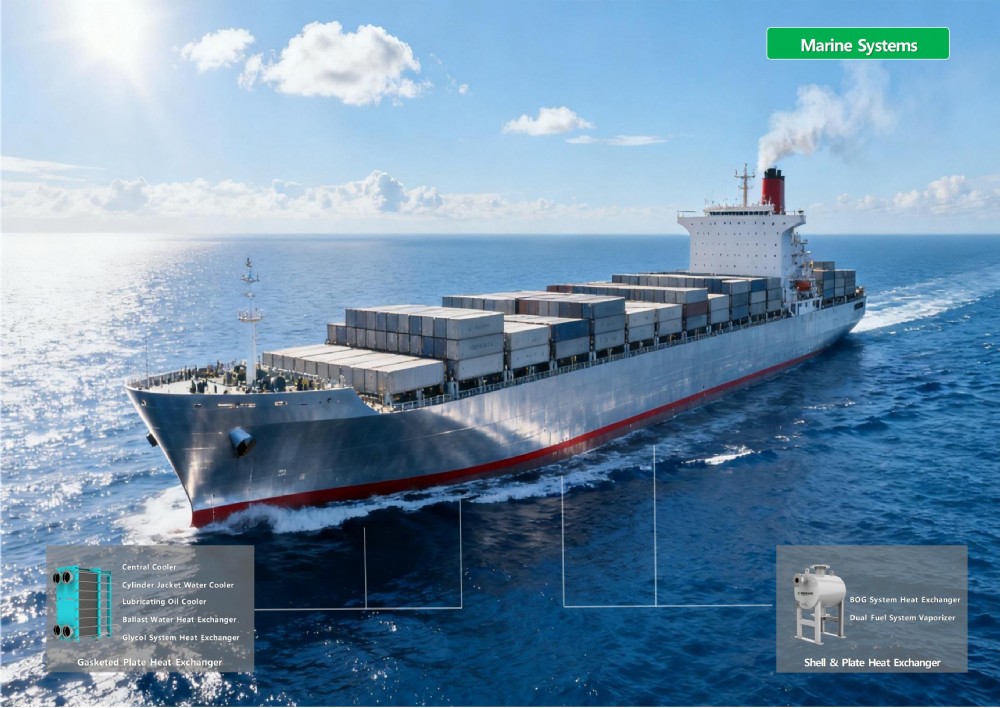
During vessel navigation, core applications including main engine cooling, auxiliary lube oil temperature control, seawater desalination, cabin air conditioning heat exchange and diesel exhaust waste heat recovery face harsh operating conditions: heavy salt fog corrosion (3.5% salinity), continuous pitching & rolling shocks (pitch ±15°, roll ±30%), confined cabin space (volumetric efficiency ≥80%), and diverse media (seawater, lube oil, fuel oil, exhaust gas).
Typical Process & Heat Exchanger Stations

Industry Overview
During vessel navigation, core applications including main engine cooling, auxiliary lube oil temperature control, seawater desalination, cabin air conditioning heat exchange and diesel exhaust waste heat recovery face harsh operating conditions: heavy salt fog corrosion (3.5% salinity), continuous pitching & rolling shocks (pitch ±15°, roll ±30%), confined cabin space (volumetric efficiency ≥80%), and diverse media (seawater, lube oil, fuel oil, exhaust gas).
Heat exchangers must deliver high heat transfer efficiency and robust environmental resistance with zero leakage.
For stable power output, main engine cooling keeps jacket water at 85–90°C; auxiliary lube oil is maintained at 40–55°C to reduce wear. Seawater (32‰ salinity) shall be rapidly desalinated to fresh water with salinity ≤500ppm. Thus, the equipment requires top-tier corrosion resistance, anti-vibration capacity, sealing reliability and compact footprint.